

I was excelling, achieving, but inside, I was unraveling. Where is home? If I stopped moving, what would I have left?
For me, identity has always been complex, a tapestry woven with layers that constantly shifted and evolved. It was shaped by the diverse places I had lived in western India and the people who spoke different languages and carried distinct histories.
My mother hailed from Maharashtra and my father from Gujarat, my formative years were spent in the tribal regions of north-western India, landscapes that felt familiar and foreign at the same time. Within the walls of our home, English was the language we spoke. Once outside, I effortlessly transitioned between languages, adapting to whomever I was addressing.
By the time I reached the sixth class, I had already traversed thousands of kilometers, and attended nine different schools.
My schooling, too, followed a far from straightforward path. In second grade, I moved to Manali, Himachal Pradesh to live with my relatives, an experience that ended with my return home after battling severe depression—a burden too heavy for my young age to fully comprehend, yet one I acutely felt. I completed that academic year through homeschooling before another move in third grade, this time to Mount Abu, Rajasthan. By the time I reached the sixth class, I had already traversed thousands of kilometers, and attended nine different schools.
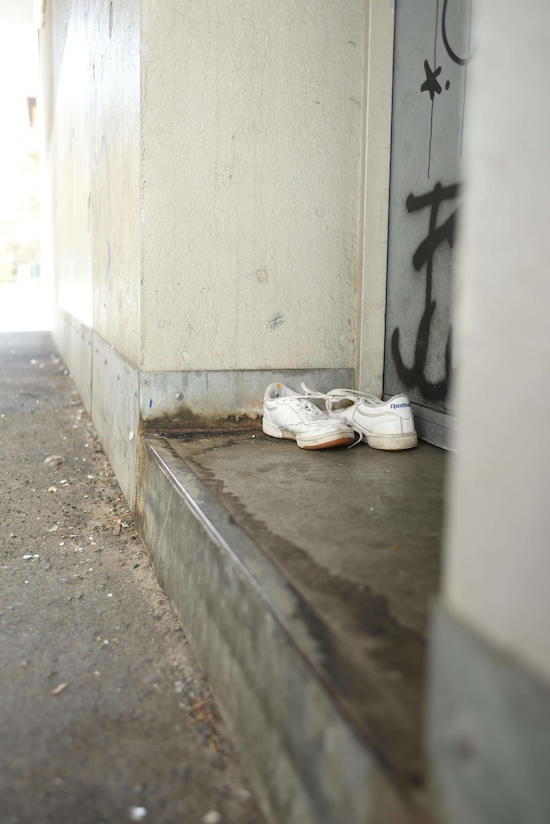
My story took a significant turn as I entered my tenth and final school. My high school education was fully funded, and in my 11th and 12th class, I had access to everything I could possibly need. I was exposed to new opportunities, benefited from small class sizes, and thrived in a structured learning environment. My world expanded in ways I had never before imagined. I even gained weight, a physical manifestation of a newfound comfort I had never experienced. I remember walking into school wearing my green Reebok shoes—a significant upgrade from the years of painstakingly painting my old white shoes to give them a semblance of newness, and from dragging my worn-out formal shoes until they literally fell apart. Life had shifted from being simple yet satisfying to a state of comparative luxury. My clothes were folded, my meals were prepared, and my bed was made for me. Everything was taken care of.
Then, I entered college and everything abruptly changed. I had 3000 rupees a month to survive on. Weeks would pass with no money in my pocket. Walking everywhere became my reality—not a choice, but a necessity. Hunger became an unwelcome and persistent companion. My parents would send money, sometimes enough for the month, sometimes for a few. I would typically start the month with a KFC Zinger burger and a stash of sweets from the college canteen, only to end it with weeks of eating just plain rice. I learned to navigate friendships with a hidden strategy, lingering at homes where a meal might be offered and stretching conversations in the hopes that they would lead to the dining table. Some weeks, food was a luxury I simply couldn’t afford. The descent was rapid and harsh, leading to an unraveling that went beyond my financial circumstances; it shook my very sense of self. The few attempts I made to earn money by performing in pubs also proved unsustainable.
I remember walking into school wearing my green Reebok shoes—a significant upgrade from the years of painstakingly painting my old white shoes to give them a semblance of newness
That first year of college was a delicate balancing act, navigating scarcity while immersing myself in music. I poured myself into singing, finding solace in the acapella group, the college choir, and the church worship band. Music became my refuge, filling the silence where hunger might have spoken too loudly. The joy of learning from the best, of harmonizing with others, carried me through the hardest days. Band practices were full of laughter, camaraderie, and purpose—distractions from the empty stomach I had learned to ignore. If I couldn’t get a lift, I walked miles to people’s homes for rehearsals, the journey itself another way to pass the time, another way to avoid thinking about what I lacked.
And then, one evening, as I tried to piece together a meager meal, my parents called. They were moving to another city. “Would you like to come stay with us there? It might be easier.” The words were an open door, an invitation to something—stability, perhaps, or at least a change. Without much thought, I made a quick decision. I quit. I left. An exit from the struggle, an escape to what I hoped would be new possibilities.
But escape was never that simple. By then, I had begun leaning on something else to survive. Hunger was a constant, gnawing at my insides, but cigarettes dulled the ache. A smoke in secret, a quiet rebellion against the emptiness. I kept it hidden, careful to let no one know. A private act of control, or so I told myself. In reality, it was the first step into something deeper—something I wasn’t yet ready to acknowledge.
I drifted between groups, searching for belonging, but never quite fitting in.
Restarting college in a new city felt like a second chance to stabilize the chaos that had defined my past year. In some ways, life settled. There was a new sense of purpose, fresh beginnings, and moments where I believed things could be different. But the deeper struggles remained, though they took on new shapes.
Academically, I felt isolated. My classmates seemed miles ahead, effortlessly referencing books I had never read, engaging in discussions where I had nothing to contribute. I drifted between groups, searching for belonging, but never quite fitting in. Christian circles welcomed me with open arms, offering a sense of acceptance I craved, yet in college itself, I felt invisible—lost in the very space I was supposed to thrive.
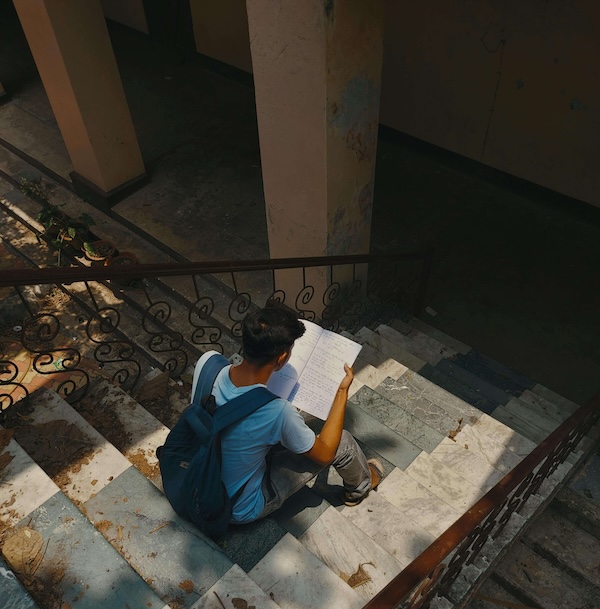
In that void, new addictions took root. Relationships became an escape, an intoxicating rush that filled the emptiness. Music, once a refuge, was now a way to stay busy, to stay distracted from being alone with myself. I threw myself into both, constantly moving, constantly engaged, keeping just enough distance from the thoughts that threatened to surface. The city felt overwhelming, suffocating, so I would escape to the hills, seeking clarity. But I left those moments of solitude more confused, more conflicted, unable to make sense of what I was becoming.
There was never money to go out with friends after class, no casual café meetups or weekend outings. In some ways, that limitation saved me. It forced a kind of balance, keeping me away from harsher addictions, keeping my distractions contained. Instead, I poured myself into the music scene, climbing the ladder professionally within college. The recognition, the success—it became its own high, its own addiction. Academics faded into the background, unimportant next to the thrill of performing, the fleeting validation of relationships, the temporary sense of worth that came from being wanted, from being heard. I was excelling, achieving, but inside, I was unraveling.
My classmates seemed miles ahead, effortlessly referencing books I had never read, engaging in discussions where I had nothing to contribute.
College life moved forward, and with it, I grew, at least in ways that could be measured. But as my final year approached, so did a new kind of uncertainty. What was next? What was I supposed to do with this degree that no longer felt like a path but a loose thread I had lost grip of? I knew one thing: I wanted to work. I wanted to step into something real, something beyond the routine of classrooms and assignments. An organization came to campus for a presentation. Their cause resonated deeply, stirring something within me that had long been dormant. It felt right. I joined them, stepping into a year of intense learning and growth. It was a brilliant start to a career, one that gave me purpose, that challenged me, that shaped the way I saw the world. For the first time, I had my own money. It wasn’t much, but it was mine. The small joys of independence, buying things for home and for myself, felt like victories, proof that I was moving forward.
But forward was never a straight line. By the end of the year, I made another big decision: to move to a new city, away from family, to explore my career and push myself further. It was an exciting shift: new opportunities, new professional growth, a sense of stepping fully into adulthood. But with independence came the familiar pull of old patterns. The addictions I had kept at bay found their way back, creeping into the spaces where uncertainty and loneliness lingered. Even as I built something promising, parts of me were quietly unraveling, slipping into habits I had once told myself I had outgrown.
The first year of work had been good—challenging, fulfilling, full of growth. Then came the next step: a bigger role, a bigger salary, a life that felt like it was finally expanding in ways I had once only imagined. With the pay raise came new freedoms: a credit card, fancier living, access to experiences that had once been out of reach. I walked into restaurants I could never have afforded before, sat in coffee shops where I had once only sipped water, now ordering full meals without hesitation. Each swipe of the card, each indulgence, felt like a reward for the struggle I had endured. But with it came a slow, creeping trap—debt. I earned more each year, yet somehow, I was always behind, always spending just a little more than I had.

Work was difficult at times, but I kept pushing, learning, and growing. Over three years, I found my niche, discovered what I was good at, and began gaining real recognition. More responsibilities, more people seeking my advice, looking to me for guidance. It should have felt like success. And professionally, it was. Personally, though, my life was in shambles. With more money came easier access to vices, to distractions that numbed rather than healed. I was spiraling, but I masked it well, thriving in the workplace, excelling in my field—all while barely holding myself together outside of it. The divide was growing, between who I was on the outside and the turmoil I carried within.
Relationships burned bright and fast, nicotine kept me steady, and traveling gave me the illusion of freedom. I was celebrating life on the surface, chasing highs that masked deeper wounds, yet in reality, what had once been a balancing act was now spiraling out of control. My professional skills, once sharp and reliable, began slipping. I worked obsessively, throwing myself into long, relentless hours, 8 AM to 11 PM, crashing in bed, then repeating the cycle. Work became an addiction, a place to lose myself, but even that started to fall apart. Good friends kept me grounded, kept me from falling further than I might have. They reminded me of who I was, even when I could no longer see it myself.
Relationships burned bright and fast, nicotine kept me steady, and traveling gave me the illusion of freedom.
And then I was fired. Just like that, the identity I had tied so much of myself to was gone. I was left with nothing but questions. Who had I become? What had I lost along the way? How many people had I hurt in my recklessness? What about the good people, the ones who had tried to anchor me, the ones I had pushed aside?
And then the bigger questions, the ones that refused to let me go. Was I now a prodigal? If so, where should I return to? Was there even a way back? In the silence that followed, the old questions returned—ones I had buried under years of movement, success, and distraction. What is home? Where is home? Had I been chasing adventure, or had I been running all along? If I stopped moving, if I stopped escaping, what would I be left with?
For the first time, I had to sit with myself. To face the uncertainty, the brokenness, the gaps I had spent years filling with work, relationships, and numbing habits. What did it mean to heal? How could I rebuild life when my foundation felt unsteady? How could I start again when the path forward was unclear?
Then there were practical questions, ones that gnawed at my sense of stability. How could I earn money again? How could I live life without the crutch of constant motion? The loneliness was suffocating. Chaos had been my constant companion, my fuel. It was thrilling, intoxicating even. But it was also destructive, triggering a cycle I could no longer control.
Then came the diagnosis—ADHD and fibromyalgia. Labels that offered some answers, explanations for the struggles I had fought through for years, but not relief. Chronic pain and constant brain fog left me with even more questions. What now? Understanding was one thing, but change? Change was an entirely different battle. Healing is not a destination but a journey, one I am still navigating, one I often stumble through. Some days, I feel like I am rebuilding, regaining pieces of myself I thought were lost forever. Other days, the weight of past choices, of people hurt and bridges burned, feels impossible to bear. But I am learning. Learning to slow down, to sit with discomfort instead of running from it. Learning that home is not a place but a process, that healing is not about erasing the past but making peace with it. And yet, the questions remain. Who am I beyond my past mistakes? Can I ever fully return to myself? What does it mean to truly belong, not to a place, not to a career, not to another person, but to myself? The road ahead is uncertain, but for the first time, I am choosing to walk it—awake, aware, and willing to find out.