

My uncle was a Mission Leader. But he was also human with unspoken traumas that cast a long shadow.
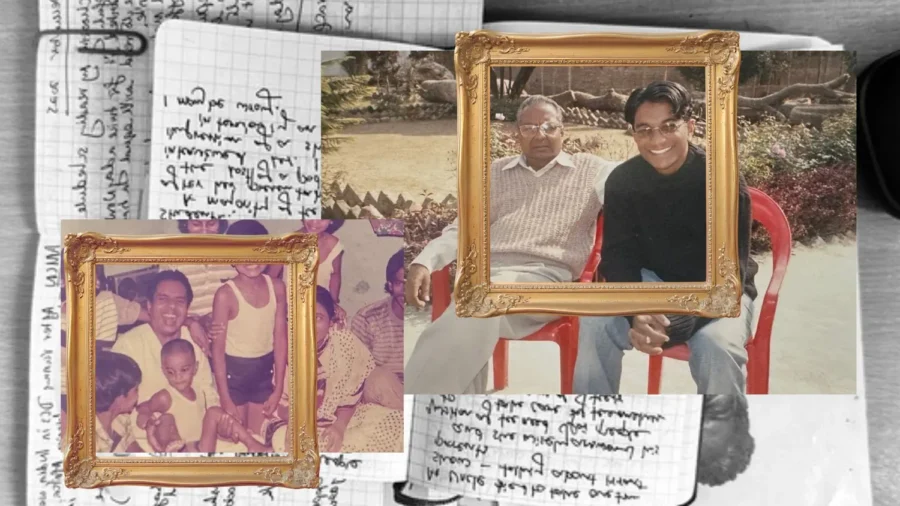
I have a picture of my uncle (we called him Baba Mamu) with several of us cousins as children surrounding him seated on a carpet; he is seen with his head thrown back, laughing. We’re all occupying space in the picture, we are carefree and comfortable. I am about three years old, snuggled on his lap. It reminds me that there was a time when he was loving and gentle rather than someone who was feared and, eventually, resented. He passed away on the 28th of September 2024.
I have a picture of my Baba Mamu with several of us cousins as children surrounding him seated on a carpet; he is seen with his head thrown back, laughing. We’re all occupying space in the picture, we are carefree and comfortable.
As a young person growing up among many Christian mission organisations across India, it had seemed to me that after his conversion from a traditional to a more charismatic and crusading form of Christianity, there had been a change. He was intimidating in his manner, he sought to correct others forcefully and when he scolded he lashed out, and was hurtful in the things that he said. I had been a witness to one event where my cousin was inviting him to attend a celebration in a town nearby. But my uncle responded viciously and he snarled that he could not be expected to come anywhere, but if they wanted, they should have to come to him. His voice sliced through the room replacing the banter with an unforgettable silence. The irony was that my cousin who was on the receiving end had driven me a long distance to see Baba Mamu; he had laughed, poked at me and commented the whole way, about the beating I was going to receive when Baba Mamu saw that I had gotten my ears pierced.
Even small children would be scared when he spoke to them and started crying when he tried to pick them up to show love and affection. I remember being horrified, watching him verbally abuse his brothers and sisters, not necessarily with bad language but a disheartening behaviour. I watched him make enemies of his relatives and become suspicious of other mission organisations who he imagined as a threat to the jurisdiction of his mission compound. At least twice he refused to attend the weddings of his nieces and nephews when he was not a guest speaker and once, we cousins saw him slap our elder cousin brother, while my cousin was driving, deeply embarrassing him and confusing those of us who were sitting wide-eyed in the back seats.
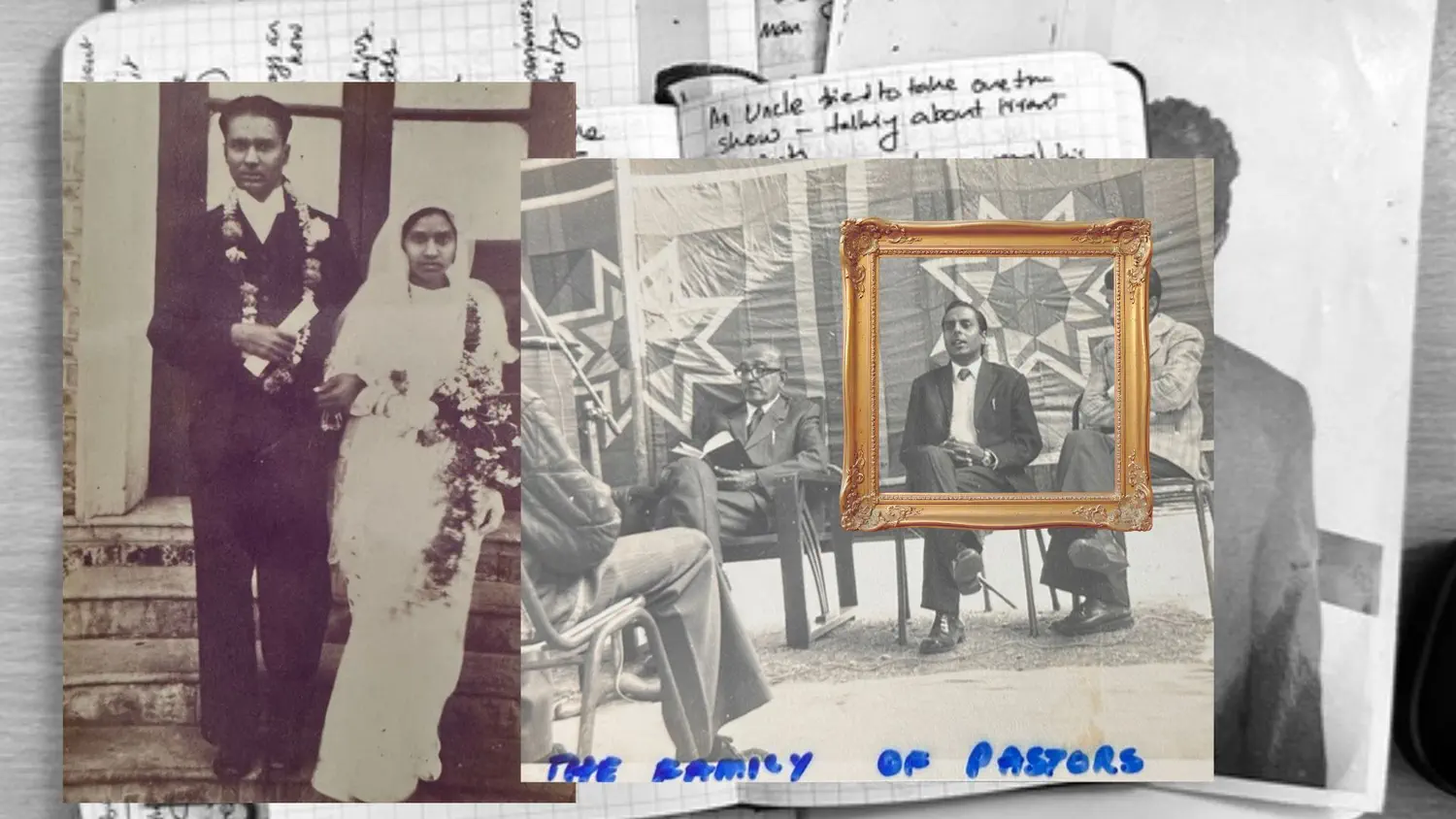
He was caught by another cousin sitting on the toilet seat mixing alcohol and water in the lota. This was not an incident I saw myself and I am aware that gossip, hearsay and alcoholism run rampant in the family. In his youth, it is noted that my uncle was an alcoholic, and he had wreaked havoc in the family. At one point, he even sold the family jewels. The full extent of his problem is not known and purportedly ended with his conversion to Christianity. But he continued a lifelong habit of chewing rajnigandha which made him spit streams of red and stain the toilet sink, making life difficult for anyone visiting the toilet after him.
He presided over bible studies at 4 a.m. and in his preaching delivered admonishment and verbally intimidated those who were gathered. Once, a moderator introducing the speaker after him said “We have heard the hard and stony message, but from the next speaker we shall hear the message that is as sweet as honey”.
…he was known to cry at the sufferings of others, to join people when they were mourning and to partake in their hardship…
All this being said, he was known to cry at the sufferings of others, to join people when they were mourning and to partake in their hardship as it was a cup that had also been passed onto him. He had adopted and helped many orphans and my cousins remember standing in the queues at his orphanage to eat the delicious porridge that was served. After the early death of his own father from cancer, the family had fallen into poverty. One winter night, the cold was such that it would bite into your bones. My uncle broke down a door to make a fire to warm the family. But this story is disputed in the family and it is difficult to find the truth because many things have been left unspoken and the hardship is largely untold.
When I heard that he had died, I asked my mother to tell me about her elder brother. We stood together and ate what had been his favourite sweets; careful as too much of the sweet could make you sick. I wondered whether he had a space to speak about the complex things that he had gone through in his life. Perhaps because of his busyness after he had become a Christian Mission Leader; the hard things remained unspoken. I wondered what would have happened to my family if some of those things had been able to surface, would it have made space for other kinder things to emerge?
As a young missionary leader, he had been travelling with his wife and their first child, a handsome boy, quick to smile; but on that journey, the child died in his mother’s arms. The rule was that if someone died on any train in India, the authorities had to be informed immediately and the body would have to be taken off the train at the nearest station. Co-passengers gently instructed them to keep quiet until they reached their destination so they would not have to disembark at an unknown place at their dark hour. Long hours they must have passed, devastated by their grief.
I remember the way he regarded me and the gentleness on his face before he would suddenly move to return my hug, and I would kiss his cheek.
Maybe it was a kinship, a love between uncles and nephews who barely saw one another anymore; but he was important to me. And although I lived in the south of India, and the north is vast, and India is so diverse that it is like many, many countries, I would try to visit him in the obscure little town in the Hindi Heartland where he lived. I remember the way he regarded me and the gentleness on his face before he would suddenly move to return my hug, and I would kiss his cheek, and as we pulled apart, he would hold my shoulders and gently shake me, continuing to regard me. He allowed me to put my arm around his shoulders as we walked the length of his mission compound. He seemed to enjoy my company, laughed at my jokes and ignored me when I teased him. He asked me gently about my earrings and he seemed to like them. He inquired about my relationship with Jesus and whether I had been ‘born again’. My answers must have been unsatisfactory because he invited me to attend the convention of the Holy Spirit that he was organising, maybe I would also be ‘saved’.
I tried to speak to him as he was, going to him as I was. It occurred to me that he wanted to be treated as a person instead of a ‘great mission leader’. I remember that he smiled in my company and my sorrow is that he seemed alone and friendless in this world.
In the months after he passed away, some of us cousins called each other, exchanged texts late into the night. We were reflecting on who we were in this world. And if we were like him, somehow.
And my mother, she stood for a long time speaking to me about her brother. When she had wanted to marry my father; Baba Mamu had stood for her and had supported them in every way.